
Care or Control? 🫣 When Wellness & Self-Improvement Stop Serving You
Hey hey, friends, and welcome back to The Self Care Sisterhood podcast.
Last week, I gave you a full life update. I shared what I’ve been learning, what I’ve been loving lately, and some of what I’m looking forward to as we head into the final stretch of the year.
One of the updates I shared in my wellness was that I’ve been using a new workout app called Ladder for my strength training. I recently completed my first full 6 week series and I’m feeling amazing.
In Ladder, every coach takes two weeks after a series to do a two week planned deload period —which is essentially a strategic period of reduced training designed to help your body and nervous system recover. Each coach has a team chat and as we were wrapping up the series and heading into this deload, I began noticing a conversation happening around it. And that conversation opened up something much bigger that I knew I wanted to bring here. I promise I’ll pop back to this thought…but first…
Around the same time, I came across a carousel from Robin Sharma that stopped me mid-scroll.
He asked whether we are heading toward “peak optimization”—trying to ice-bath, sauna, supplement, schedule, and maximize our way into becoming better humans.
And then he made this distinction: yes, he has encouraged early mornings, but never as a way to make us live like machines. Those practices were intended to create quiet space to access our wisdom, heal, care for our health, use our gifts, and live meaningful lives.
He wrote:
“To run your life like a robot. To schedule every waking hour to maximise your performance. To treat a day as a race.”
He went on to say that living this way blocks our creativity and reduces the poetry of a life.
And then he ended with this reminder: have great habits. Use your gifts. Honor your dreams. But remember that you are a human being—not artificial intelligence.
I paused because this wasn’t coming from someone who had spent his career rejecting habits or personal growth.
Robin Sharma has taught early mornings, discipline, personal mastery, and intentional living for decades. His point was that these practices were supposed to create space for us to think, heal, connect with ourselves, care for our health, use our gifts, and live meaningful lives.
They were never supposed to turn us into machines.
And you guys, that caused me to pause because I feel this deeply:
I teach this work too.
I wrote a journal called WIN THE MORNING.
I created a framework called OWN YOUR EIGHT.
I have coached women through habits, movement, nutrition, mindset, goal setting, time management, and Best Self Choices.
I’ve taught women to track their choices, pay attention to their patterns, and create structure around what matters to them.
I believe in this work. I believe our habits shape our lives. I believe intentional routines can support us. I believe data can help us understand ourselves. I believe in setting goals, working toward them, and following through after the original motivation has worn off. And I also believe that, at some point, the scale can tip.
The routine that once supported our life can begin running it.
The data that gave us helpful information can start determining how we feel about ourselves.
A goal that gave us direction can become a finish line that never stops moving.
And self-care can quietly become another way of controlling ourselves.
That is the question I want us to explore today:
At what point does caring for ourselves become controlling ourselves? And how can we tell if we’ve crossed that line — so the work of personal growth continues to help us heal, hear ourselves, and genuinely care for our minds, bodies, and spirits?
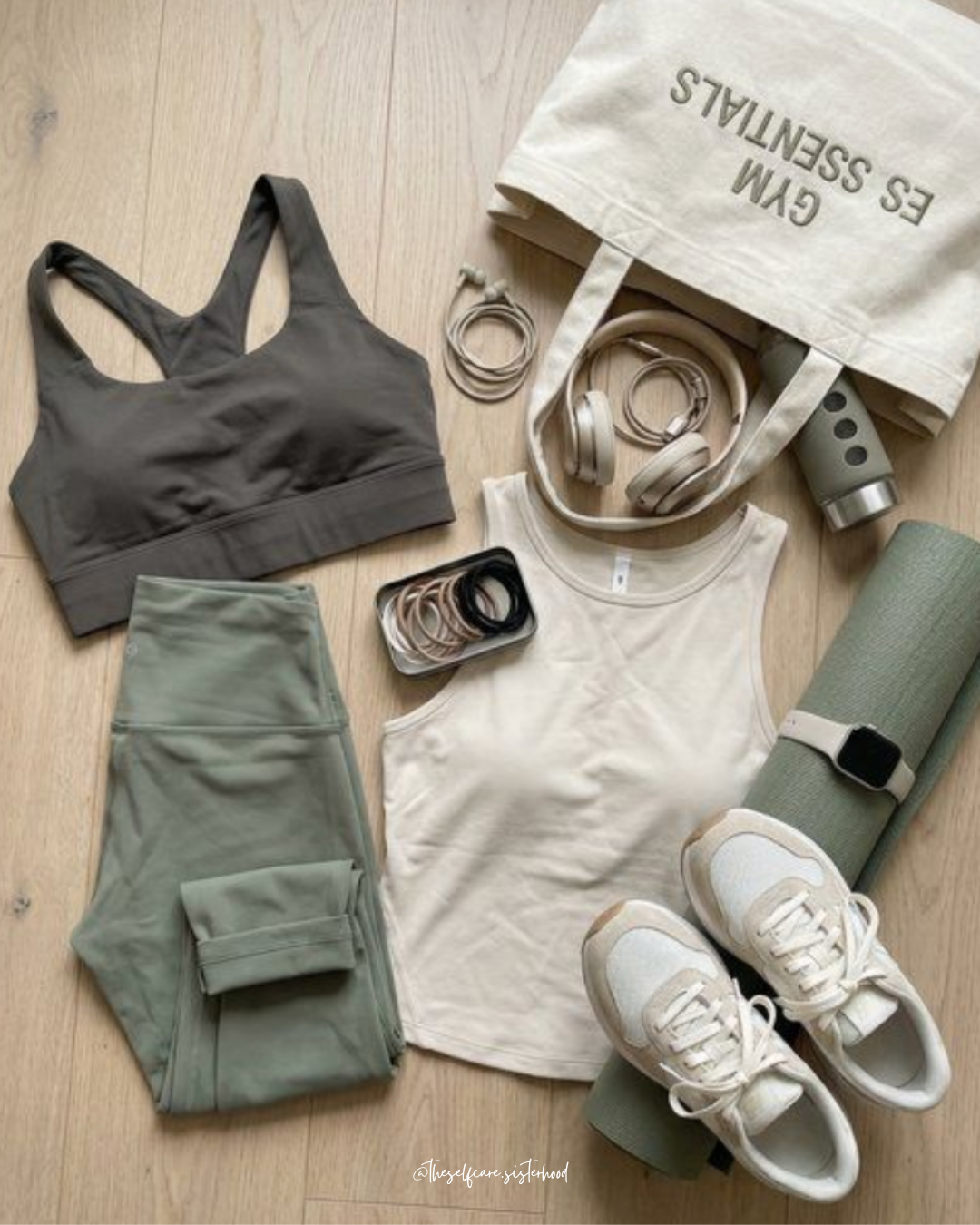
WHEN REST FEELS LIKE LOSING PROGRESS
Okay so let me come back to that planned deload I mentioned as we kicked off our conversation.
After completing our 6 week series, we entered into a two-week deload. Deloads and recovery weeks are intentionally built into the programming to give our bodies and nervous systems time to recover before beginning the next training cycle. This is smart training. This is NOT what I did back in my Beachbody coach days and I wish I did bc it led me to a LOT of overtraining.
On the app, there’s a team chat where we can post our workouts, goals, questions, etc and the coach is fully present in those conversations. It was wild bc as we entered deload so many women were worried about what those two weeks would do to their progress.
Would they lose their momentum?
Would they lose their strength?
Should they find something else to do during the break?
How were they supposed to hold onto everything they had worked so hard to build?
And listen. I don’t judge that. I understand why those fears surface. When something is working and you feel good, you don’t want to lose it.
I also recognized the mindset behind those questions because, again, I spent so many years in BB moving directly from one program into the next.
Finish one calendar. Start another.
Keep going. Protect the momentum.
There was always another program to complete, another calendar to follow, another challenge to begin.
Over the years, I’ve had to learn that recovery isn’t an interruption to the work. It is part of the work. I truly have to take recovery and rest as seriously as I do the work. Bc if I don’t…the work stops working, ya know?
The deload isn’t threatening our progress. It’s intentionally designed to support it.
But reading those responses made me realize how difficult it can be to receive rest as care when we’ve learned to associate constant action with progress. The program was offering us care. But for many women, receiving that care felt like losing control.
And I began wondering:
When does the desire to care for our health become a need to control every variable?
Care can follow the program into a season of recovery.
Control hears “two weeks of recovery” and immediately starts looking for a way to compensate.
Care trusts that progress can include periods when we aren’t actively pushing for more.
Control believes that if we loosen our grip, even briefly, everything we’ve built might disappear.
And this doesn’t only happen with exercise.
It happens when a sleep or readiness score that was meant to give us helpful information begins telling us how we should feel before we’ve even checked in with our own body.
I love my Oura Ring. I believe the information it gives me can be incredibly useful. But the score is supposed to help me understand myself. It isn’t supposed to have the authority to decide how I feel—or whether I’m doing a good job caring for myself.
It also happens when the morning routine we created to support our day becomes a list we have to complete before we’re allowed to feel like the day counts.
I wrote WIN THE MORNING because I believe the way we begin our day matters. I know how much a thoughtful morning can change the way we show up for everything that follows.
But a morning routine is supposed to support the life we are waking up to.
If one interruption, one late start, one sick day, or one season of life that requires something different leaves us feeling like we’ve already failed before the day has really begun, the routine may no longer be serving its original purpose.
The workout program isn’t the problem.
The Oura Ring isn’t the problem.
The morning routine isn’t the problem.
These are tools. Helpful ones.
The question is whether we are using those tools to care for ourselves—or whether we have quietly given them control over how we feel about ourselves.
IS IT CARE OR CONTROL?
So let’s look at the difference between care and control. It really is a fine line bc care and control can look exactly the same from the outside.
Two women can wake up at the same time, complete the same workout, follow the same meal plan, or track the same habits. One may be using that structure to genuinely support herself. The other may feel as though she has to follow it perfectly or everything she has worked for will begin slipping away.
The difference often reveals itself when the plan has to change.
What happens inside you then? Can you receive the new information, make an adjustment, and remain on your own side? Or do you immediately feel guilty? Do you begin looking for a way to compensate? Do you question your discipline, worry that you’re losing progress, or tell yourself that you’ve already messed everything up?
That reaction doesn’t make you bad or broken or overly controlling. Most of the time, if we’re honest, it means we’re afraid.
Afraid of losing progress.
Afraid of going back to an older version of yourself.
Afraid that if you loosen your grip, everything you’ve worked so hard to build might fall apart.
And I understand that fear. So here are some ways I can tell the difference in my own journey between care and control.
Care responds to what you need each day. Control reacts to what you fear.
So, if I’m trying to decide whether or not to work out today, care might ask, “What would actually support my body today? Do I need the strength workout I planned, something gentler, or a day to recover?”
Control might say, “If you skip this workout, you’re going to lose your momentum. And you know how hard it will be to get started again. Do it no matter what.”
Care uses structure to support you. Control needs you to follow the structure perfectly.
The clearest example I can give you is my morning routine. If I miss one day, control is going to tell me, “You wasted the morning. Now the whole day is gonna be off.”
Care says, “This morning didn’t go the way I planned. What is one thing I can do right now that would help me feel supported moving forward?”
Care allows the plan to adjust when your body, your capacity, or your season shifts. Control interprets shifts in the plan as failure.
Care understands that the version of a routine that supported you in one season may need to look different in another. Control assumes that if you can’t keep doing it the same way, you must be losing discipline or moving backward.
So if this conversation has brought an area of your own life to mind, I want you to ask yourself three questions:
What was this practice originally meant to support?
What happens inside me when I can’t follow the plan?
And am I responding to what I need—or reacting to what I fear?
That’s it.
You don’t need to audit every habit, throw away your planner, delete your apps, or abandon the goals that matter to you. Maybe this week, you simply notice one place where something you began as care may have quietly become control. Then ask what it would look like to loosen your grip just enough to let that tool support you again.
Maybe you take the planned rest without finding a way to make up for it.
Maybe you check in with your body before allowing a readiness score to tell you how you feel.
Maybe your morning becomes a few choices that support you instead of a checklist you must complete perfectly.
Maybe you allow yourself to adjust without turning the adjustment into a story about who you are.
You don’t have to abandon your desire to grow in order to treat yourself with care.
You are allowed to have goals.
You are allowed to create routines, track your progress, challenge yourself, and follow through after the motivation wears off.
You are allowed to care deeply about becoming the woman you know you can be.
I’m ALL for those things. Today I just want us to check ourselves a little bit. Let’s make sure the tools we chose to support our life with are still working FOR US—and that somewhere along the way, we haven’t started working for THEM. Ya know what I mean? Subtle. But powerful.
The habits are here to support your humanity. The data is information. And adjusting the plan does not make you a failure or a quitter. Sometimes, it’s evidence that you are finally listening to yourself.
And that is the kind of growth I will always believe in.
I love you so much. I’m forever and always rooting for you. And I will see you right here next Monday on The Self Care Sisterhood podcast. 🖤

PS…This website includes affiliate links. If you click and purchase, I may receive a small commission at no extra cost to you. I only recommend products + tools that I have personally reviewed, love, and/or use. You can read the full statement HERE.
